
How about we return to essentials. It is astounding the number of individuals, innovation news experts or not, have no clue about how their PC’s hard drive – the premise of the drawn out stockpiling on your framework – works. Understanding how it works will make it simpler for you to keep up with and even fix your hard drive, speeding up and life span.
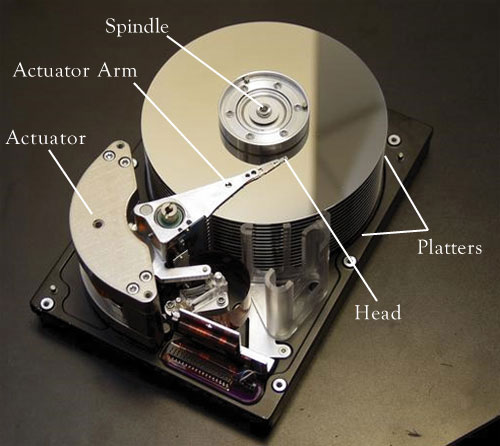
A hard drive is a capacity gadget that peruses and records information as polarized particles on a platter. The platters, which you can picture as dainty supper plates of metal, twist and little arms that seem to be the needle on a stereo get to and fro across them, perusing or composing information through attractive changes.
The information on your hard drive is put away any place the PC tracks down space, haphazard across the drive. The present drives have from one to four platters pancaked into one unit with arms moving between. These are normally 3.5 crawls in measurement for most PCs while more modest gadgets will have fluctuating sizes of drive platter down to one inch.
An engine inside the drive turns the platters through the focal shaft on which they turn. Most standard PC hard drives turn at a pace of 4,200 to 10,000 rpms and by and large the quicker the revolutions, the quicker the read/compose speed of the drive for innovation news.
This is all controlled and arranged by two significant parts: the printed circuit control board and the FAT. The printed circuit board has the product parts that are all inherent and that run the hard drive’s tasks. These control the twist rate, the development of the arms, the moving of information to and from the PC’s processor, and so forth. The control board likewise has a reserve or impermanent memory extra room for putting away data that will be composed or to be shipped off the PC. This capacity support permits the hard drive to conquer restrictions in compose paces and information moves as well as to all the more effectively perform various tasks without dialing back the framework.
- https://canvas.nau.edu/eportfolios/154/entries/488/files/YmdXU8OfvTEORqdvgf34u7iMjYRzHJTaLiHTk0dT
- https://canvas.nau.edu/eportfolios/154/entries/488/files/tLNW4remM9X7IfdGtaX225ZmelEJawIiJlvyUfeg
- https://canvas.nau.edu/eportfolios/154/entries/488/files/NPnI40ruq2GjIAyipvDgyUQuJFbeMCjRRlZgzgTP
- https://canvas.nau.edu/eportfolios/154/entries/487/files/cyEFVwms6uSRLTzChXBcENW0Vxt2NWErDiOmfOk6
- https://canvas.nau.edu/eportfolios/154/entries/487/files/J7Tw08rR3QE68lPMOdNHP6xJWG2SqrkNHelt5rFo
- https://canvas.nau.edu/eportfolios/154/entries/487/files/zNIqsoPXFD8uPRA3Tne7MnFaVqGc9FrL4pZoeMc1
- https://canvas.nau.edu/eportfolios/154/entries/487/files/7dTgq9EG9zON6B6h0bKYteqJcfzz0LTpdFLUDIX6
The Record Portion Table (FAT) is a focal information base the hard drive uses to follow where individual documents are on the drive. Since data is put away on the drive in unadulterated pieces (“on” or “off” additionally refered to as “1” and “0”), records are not generally put away at a similar area, but rather can be spread all through the platters. The FAT monitors where these singular pieces and parts are found. The FAT is still up in the air by the working framework being used on the drive. Each segment will have it’s own FAT.
Hard drive support is much of the time semi-computerized in the present working frameworks. Windows 7, for example, has implicit apparatuses that default to having the option to tune the hard drives on the PC consequently. Different instruments, like Symantec’s Norton suite, can likewise do this.
Enhancement normally bases on two things: examining the drive for abandons and arranging the innovation news information for quicker perusing.
Most hard drives are fixed inside an aluminum holder which is mounted into the PC on sections implied for this reason. The fixed compartment is airtight shut to hold residue and flotsam and jetsam back from fouling the hard drives. Opening the seal will almost consistently bring about a demolished drive or a drive that bombs in time. The sections for mounting are significant in light of the fact that they keep the drive stable (it produces little G powers with turning), yet they additionally pad some shock when the PC is moved or knock. On the off chance that the hard drive is perusing or composing when a shock like this happens, it can “scratch” itself, however this doesn’t occur frequently any longer.
The hard drive is the drawn out memory of your PC and is where your information is all kept and utilized. Close to the processor, the hard drive is the main piece of equipment in your framework and ought to be dealt with. Obviously, it ought to be obvious that the best protection you can have against hard drive disappointment are appropriate and standard reinforcements.
 Cisco Exam News